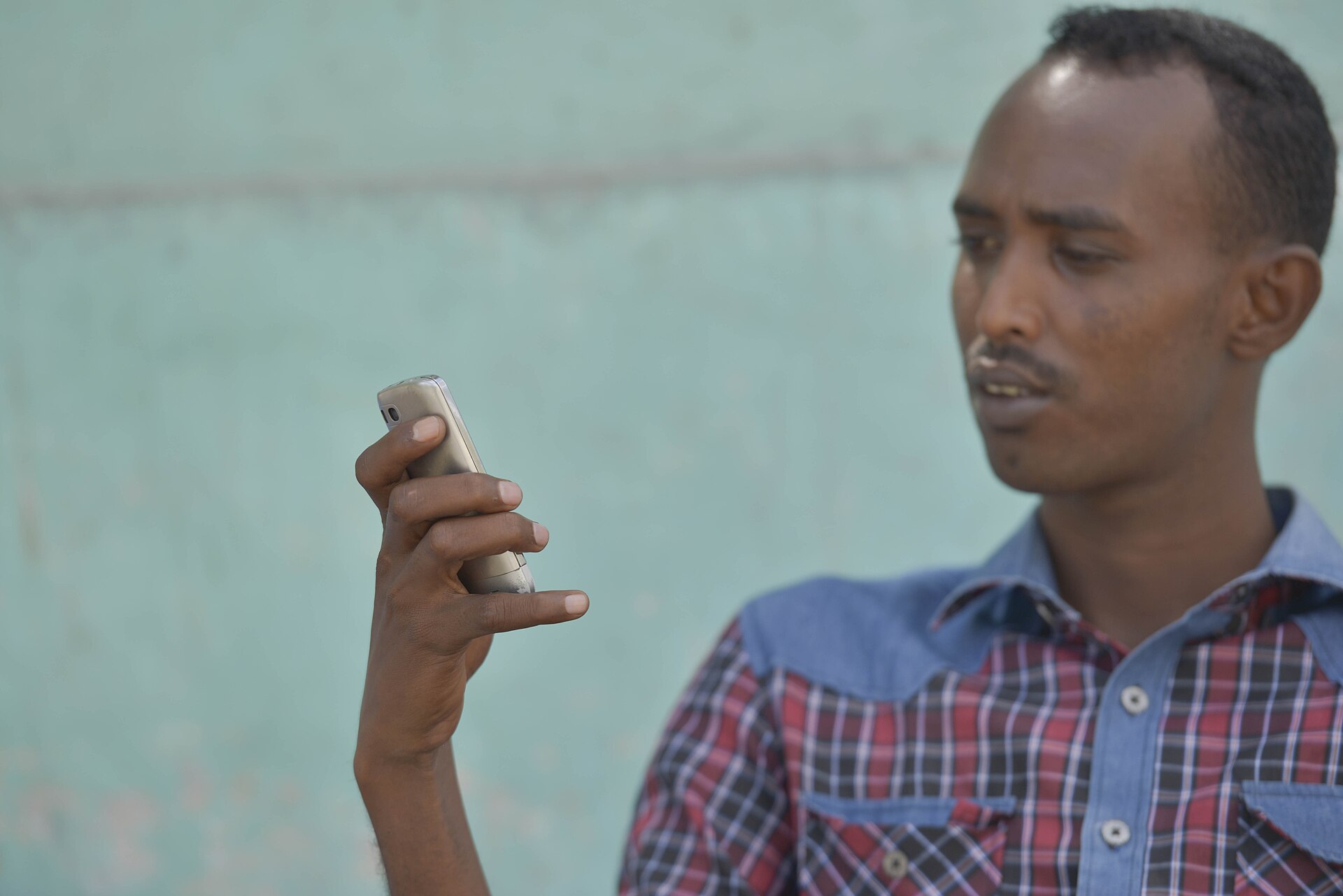
In Mogadishu, Garowe or Kismayo, a cup of tea, a bus fare and a month’s rent are usually paid the same way: by phone, in US dollars. Somalia built one of the world’s most mobile-money-dependent economies without a functioning currency or, for years, a functioning central bank. Here is how that happened, and what is changing.
How big is it?
The Central Bank of Somalia’s 2026 financial access survey, carried out with the Somalia National Bureau of Statistics, found that mobile money now reaches about 87% of adults, while only about 19% use a bank. Earlier World Bank estimates had already put mobile money use above 70% of adults. Few countries anywhere come close.
Why Somalia went mobile first
The answer lies in 1991. When the state collapsed, the central bank stopped working and no new shilling banknotes were printed. The old notes wore out, counterfeits flooded the market and the US dollar became the unit people trusted. Telecom companies, which grew quickly in the 2000s, filled the gap: a dollar balance on a phone was safer than cash, easier than a bank that might not exist in your town, and cheap enough for very small payments.
The diaspora did the rest. Remittances, worth about a quarter of GDP, increasingly arrive straight into mobile wallets, so the money that keeps many households afloat lands on the same phones they use to spend it.
From informal to regulated
For most of its life the system ran ahead of the law. That has been changing in stages:
- 2021: the Central Bank of Somalia issued its first mobile money licence, bringing operators under national supervision, and connected commercial banks through a national payment system for large-value transfers.
- January 2025: the central bank launched the Somalia Instant Payment System, which settles payments between banks around the clock.
- 2026: the central bank said it plans to link mobile money operators and regional payment networks into that instant system, so that money can move between banks and different operators’ wallets directly.
The shilling is coming back, slowly
The biggest change ahead is the return of a national currency. The central bank plans to replace the old and largely counterfeit notes with new Somali shilling banknotes under a currency board, an arrangement in which every shilling issued must be backed by foreign reserves at a fixed exchange rate. The World Bank is to design and print the notes and manage the exchange, with technical support from the IMF.
Officials said in July 2026 that the project had reached an advanced stage but gave no launch date, and the IMF has urged extreme care. Parliament is also debating amendments to the Central Bank Act, including how independent the bank will be and how the exchange rate will be set.
Why it matters
Mobile money gave Somalis a working payment system when nothing else worked. Its strength is also its risk: when most of a country’s payments run through a few private platforms, an outage, a fraud wave or a failed operator becomes a national problem, and the World Bank has warned about exactly that kind of systemic exposure.
The reforms now under way aim to keep what works while adding what the system lacked: supervision, the ability to move money between rival networks, consumer protection and, eventually, a trusted national currency that sits alongside the dollar. How the new shilling is introduced, and whether people choose to hold it, will be the real test.
What to watch
- A published timetable for the new shilling banknotes and the exchange of old notes.
- The final shape of the Central Bank Act amendments in parliament.
- Whether mobile wallets from different operators can send money to each other through the instant payment system, and at what cost.