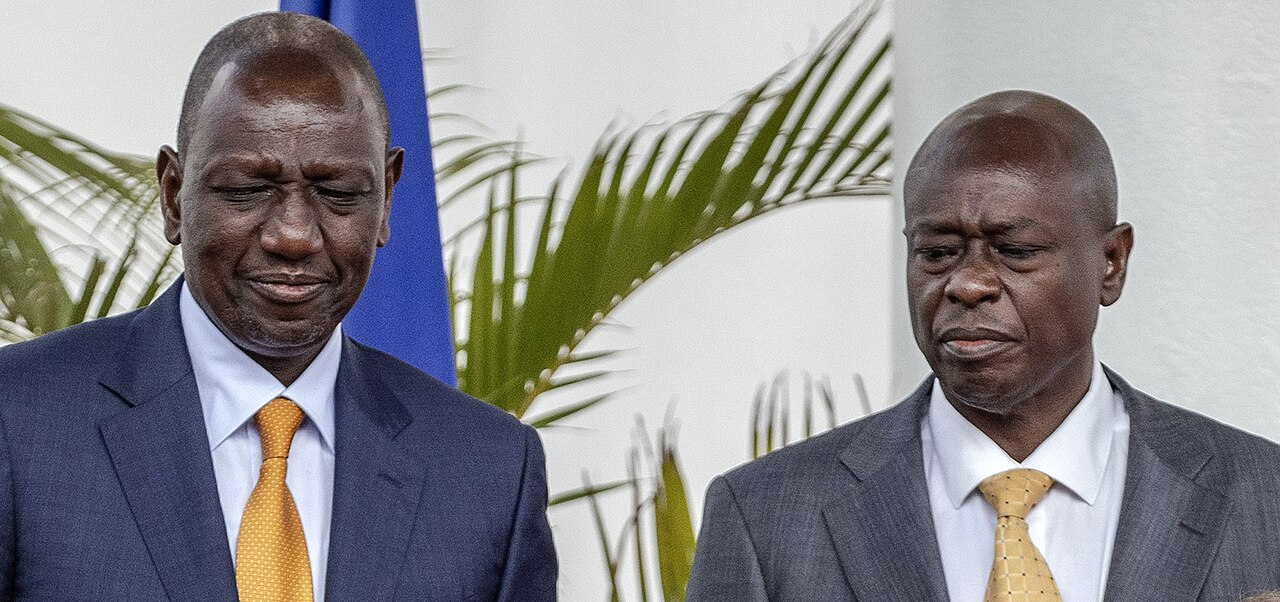
Kenyan political discourse is increasingly dominated by personal attacks and derogatory nicknames as leaders prioritise insults over policy debate, according to Taifa Leo. The tension between President William Ruto and his former deputy, Rigathi Gachagua, has intensified ahead of the 2027 general election.
During a three-day tour of the Gusii region, Ruto accused Gachagua of extorting money from businesspeople, governors and aspirants seeking tickets for his DCP party. Ruto claimed Gachagua demanded payment in exchange for political endorsements or the opportunity to speak at rallies, though the president provided no evidence to support these allegations.
Gachagua dismissed the claims with sarcasm, criticising the president for making empty development promises in Kisii and Nyamira counties. Referring to the focus on him during the president’s tour, Gachagua said he is “not a road, a water project or an airport” to be discussed at such meetings.
The exchange escalated when Ruto referred to Gachagua as “Bwana Texas”. The nickname refers to a claim that the former deputy president would relocate to the United States if Ruto secures a second term in office.
Governance experts warned that the focus on personal animosity undermines substantive debate. Javas Bigambo told Taifa Leo that while nicknames help leaders deliver messages, they reduce the space for policy-driven discussion. Political analyst Dismas Mokua added that Kenyan politics has shifted from a competition of ideas to personal wars used to divert public anger toward opponents.
Gachagua served as Ruto’s deputy until his impeachment in late 2024, a move that formalised a public fallout between the two leaders. Since his removal from office, the former deputy has become a vocal critic of the administration’s tax and economic policies.
While the leaders trade barbs, activists noted that Kenyans continue to struggle with the high cost of living, unemployment and poor public services. Activist Boniface Mwangi urged the public to demand evidence for allegations made by politicians rather than being entertained by the rhetoric.
Based on reporting by Taifa Leo (in Swahili), with additional context by Horn Globe.