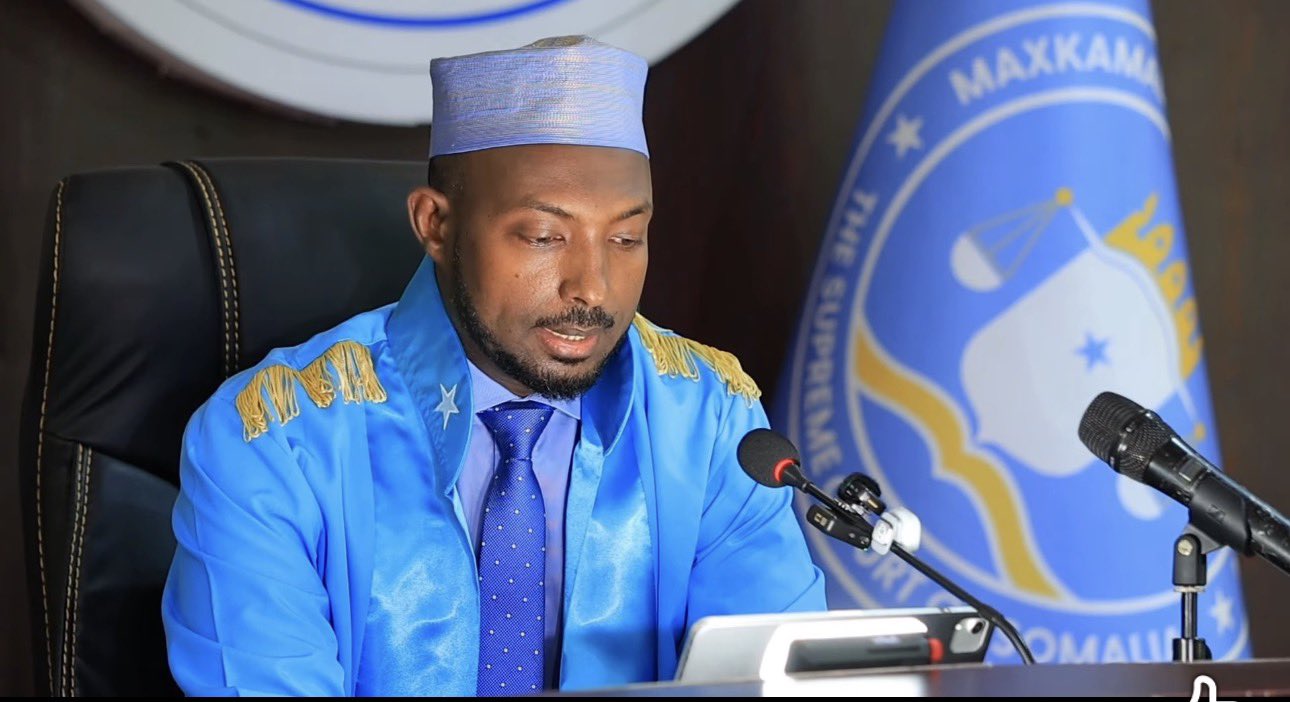
Somalia is facing a constitutional crisis following a dispute over the appointment and dismissal of the Chief Justice, raising significant questions about executive interference in the judiciary. According to Hiiraan Online, the Supreme Court recently declared the dismissal of Bashe Yusuf Ahmed illegal, contesting the president’s unilateral authority to remove the head of the judiciary.
On 5 November 2026, the Supreme Court ruled that the removal of Bashe Yusuf was unconstitutional. Despite this ruling, President Hassan Sheikh Mohamud attended the swearing-in ceremony of Ibrahim Idle Suleyman as the new Chief Justice on 7 November 2026. The move has triggered an intense legal debate regarding the procedures outlined in the country’s new 2026 Constitution.
Under Article 135 of the constitution, the appointment of a Chief Justice requires a multi-step process involving three branches of government. The Supreme Judicial Council must first nominate a candidate based on professional merit, including a master’s degree in law and at least 10 years of legal experience. This nominee must then be approved by a majority vote of 50% plus one in both houses of the Federal Parliament of Somalia before being formally appointed by the president.
Similarly, Article 138 regulates the dismissal of the Chief Justice. The process must begin with an investigation and recommendation by the Supreme Judicial Council. Legal analysts cited by Hiiraan Online argue the president “does not have the power to replace [the Chief Justice] alone by presidential decree” or administrative decision to ensure the judiciary remains independent of political pressure.
Somalia adopted a new constitution in 2026 as part of an ongoing effort to transition from a provisional legal framework to a permanent one. These reforms are intended to strengthen federal institutions and clarify the separation of powers between the executive, legislative, and judicial branches.
The current dispute hinges on whether the constitutional protections against arbitrary dismissal apply to temporary appointments and if the presidency followed the mandated legal path. The Supreme Court has maintained that judicial independence is a “fundamental pillar of statehood” that must be protected to ensure the rule of law and the rights of citizens.
Based on reporting by Hiiraan Online, with additional context by Horn Globe.