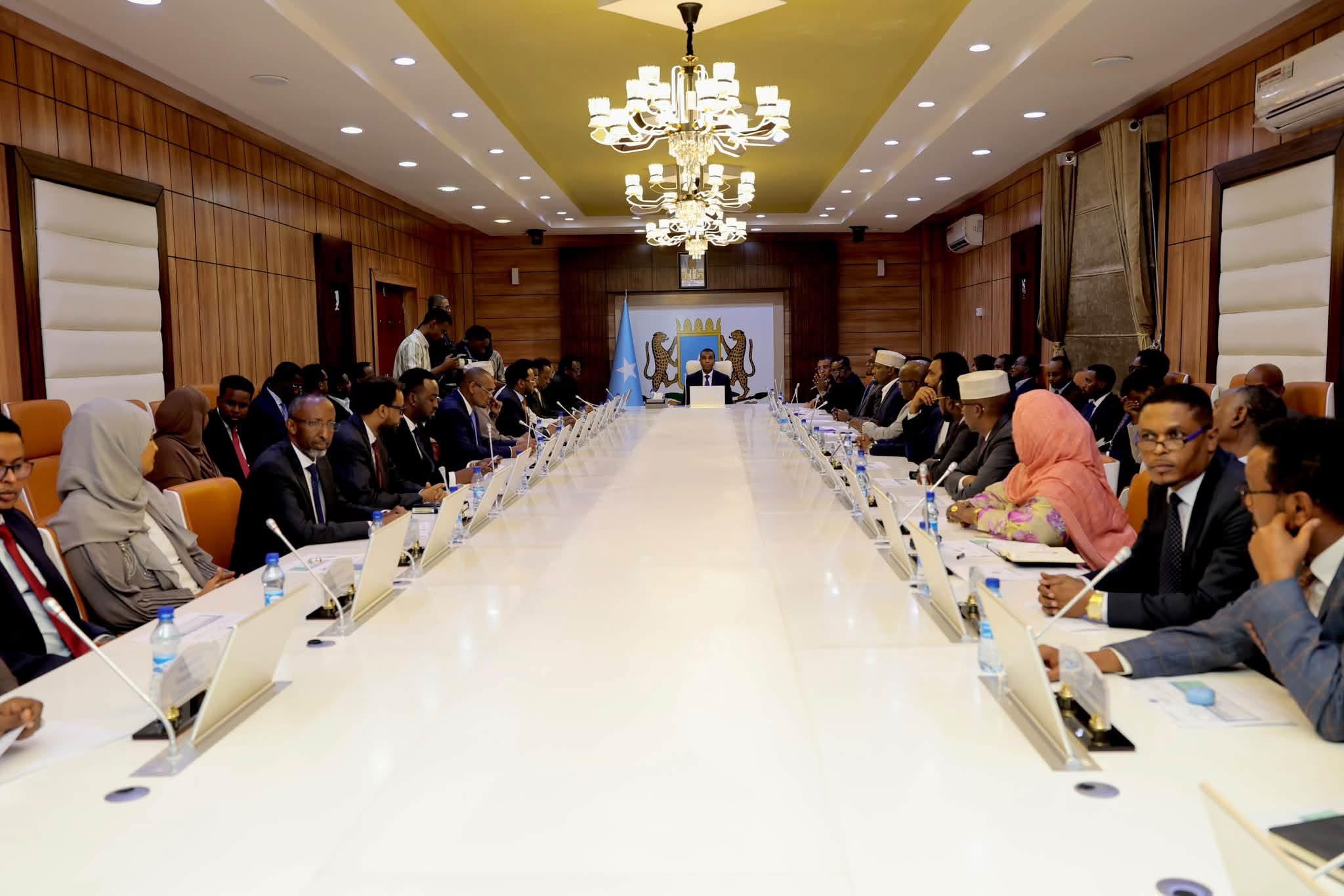
Somalia’s Council of Ministers has approved amendments to the country’s election and political party laws, introducing a closed-list electoral system and new criteria for the recognition of political parties, according to multiple Somali media reports.
The changes, approved during an extraordinary cabinet session, amend 23 articles of the National Elections Law and eight articles of the Law on Political Organisations and Parties. Under the proposed system, voters would cast ballots for political parties rather than individual candidates, with seats allocated according to party vote share. Parties would submit ranked candidate lists in advance of elections.
The amendments also establish a 10% national vote threshold for political organisations seeking recognition as national parties.
According to reports, the revised framework would provide for the direct election of local councils, federal member state assemblies and members of both houses of the federal parliament. Those institutions would subsequently elect senior office holders, including the president.
The federal government said the amendments are intended to align existing legislation with provisions contained in Somalia’s revised constitution. The proposals must still be submitted to parliament before becoming law.
The changes have drawn criticism from opposition figures. Abdirahman Abdishakur Warsame, a member of parliament and prominent opposition politician, accused the government of acting unilaterally and interfering in institutions that should operate independently.
Opposition groups continue to dispute the constitutional and political reforms advanced by the federal government and maintain that President Hassan Sheikh Mohamud‘s original mandate expired earlier this year. The federal government rejects that interpretation and maintains that the current legal framework remains valid.
Context
The proposed reforms come amid an ongoing dispute over Somalia’s electoral model, constitutional changes and the distribution of political authority between Mogadishu and federal member states. Puntland and Jubaland have previously opposed changes to electoral and constitutional arrangements that they argue were adopted without broad political consensus.
Somalia’s electoral system has historically combined indirect representation, clan-based power-sharing arrangements and negotiated political settlements. The proposed closed-list model would place greater emphasis on political parties as the primary vehicle for representation in elections.
Analysis
The amendments would introduce significant changes to the structure of Somalia’s electoral system. Their implementation will depend on parliamentary approval and broader political acceptance among federal institutions, member states and opposition groups.