Djibouti is deepening its educational partnership with China, shifting the focus of bilateral cooperation from physical infrastructure to vocational training and human capital development. The Luban Workshop, a flagship vocational training centre established in 2019, has recently transitioned to autonomous management and introduced specialised courses tailored to the demands of the domestic economy.
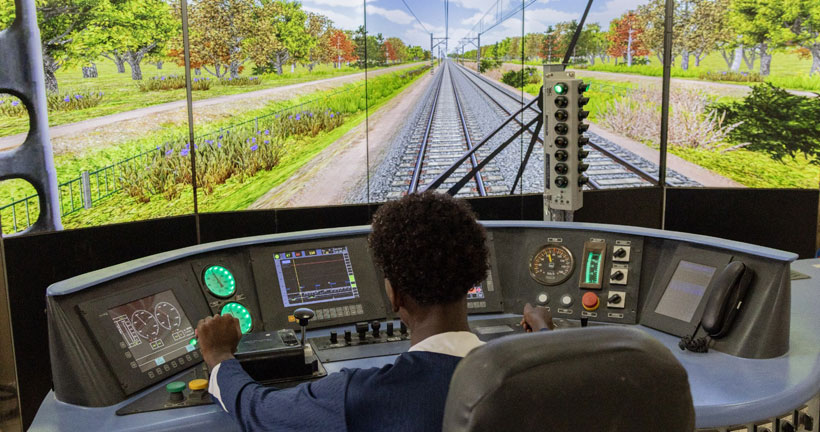
Since March 2026, the facility has been operating under dedicated leadership within the Djibouti Industrial and Commercial High School (Lycée Industriel et Commercial – LIC), directed by Hassan Abdellahi Ibrahim. Developed in partnership with vocational institutions in Tianjin, China, the curriculum was expanded in September 2026 to include an e-commerce programme. These offerings complement existing tracks in railway engineering, logistics, and international trade—technical fields directly tied to major Chinese-funded transport and trade hubs in the country.
According to the Ministry of National Education and Vocational Training (MENFOP), enrolment in Mandarin language instruction surged from 545 students in 2022 to 1,776 by late 2024. The ministry plans to transition language teaching responsibilities to locally trained Djiboutian instructors, a process currently facilitated by the Confucius Institute of Djibouti. The broader bilateral agreement also provides specialised teacher training fellowships in China and university scholarships for top-performing graduates.
Rone Said Hadji Ismail, a technical advisor at MENFOP, emphasised that this academic cooperation is sustained by institutional frameworks, including the Djibouti-China Commission for Educational Cooperation, established in December 2023. While institutional ties remain robust, some students have noted operational constraints, pointing out that the workshop currently shares facilities and equipment with the local high school. To address evolving technical demands, a new course focusing on computer networks and the Internet of Things (IoT) is scheduled to launch in 2027.
Why it matters
For over two decades, Beijing’s footprint in Djibouti was defined by capital-intensive, physical infrastructure projects—most notably the construction and co-management of the Doraleh Multipurpose Port and the 750-kilometre electrified Addis Ababa–Djibouti Railway. By pivoting heavily toward vocational training, language instruction, and educational partnerships, Beijing is executing a strategic shift toward human capital development. This approach ensures a qualified, localised workforce capable of maintaining and operating critical trade and transport assets, thereby securing long-term economic efficiencies while embedding Chinese technological and operational standards.
At the same time, this educational expansion represents a potent form of asymmetric “soft power.” By integrating professional skills with Mandarin proficiency and university exchange pipelines, China is cultivating deep institutional and cultural ties with Djibouti’s rising youth demographic.
This deepening entrenchment occurs against a backdrop of intensifying great-power competition in the Horn of Africa. While the United States maintains an indispensable strategic and counter-terrorism footprint in the country via Camp Lemonnier—the sole permanent U.S. military base in Africa—Washington faces mounting pressure to match China’s economic and developmental statecraft. During his Senate Foreign Relations Committee confirmation hearing on November 10, 2026, U.S. Ambassador-designate Junaid Munir underscored Djibouti’s critical role as a security partner and signalled a renewed focus on fostering a business and investment climate conducive to fair U.S. competition. Consequently, international analysts are closely watching whether Western partners will introduce parallel educational and vocational initiatives to contest Beijing’s growing influence over Djibouti’s future workforce.