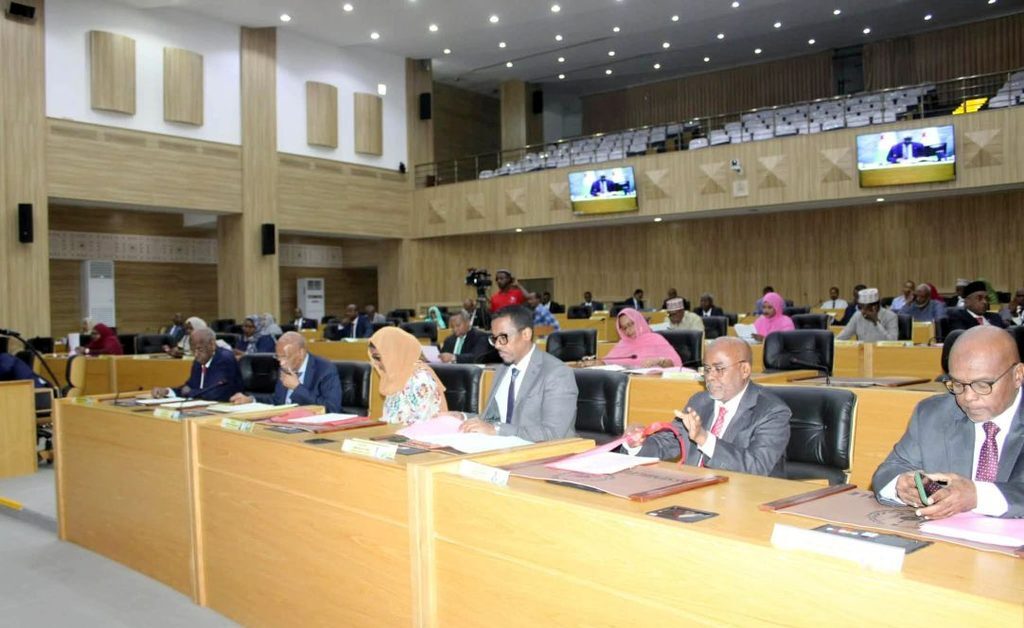
Djibouti’s National Assembly opened its second ordinary session of 2026 by passing nine bills, including a supplementary budget and a financing agreement for the country’s first national oncology centre. According to the state-owned daily La Nation, National Assembly Speaker Dileita Mohamed Dileita chaired the November 12 plenary session.
Prime Minister Abdoulkader Kamil Mohamed and cabinet members attended the sitting, which also marked the formal parliamentary welcome of newly appointed Defence Minister Aden Ali Mahamade. A centrepiece of the legislative agenda was the ratification of a $26.10 million loan agreement with the Islamic Development Bank (IsDB) to co-finance the $28.35 million national cancer diagnosis and treatment facility.
Addressing lawmakers, Prime Minister Mohamed described the oncology centre as a strategic priority designed to deliver early diagnosis and specialised care domestically. Backed by the National Social Security Fund (CNSS) and the Ministry of Health, the facility is expected to substantially reduce the state’s reliance on costly overseas medical evacuations.
Lawmakers also adopted a revised legal framework governing civil society associations, which La Nation reported is intended to modernize regulatory oversight and align non-governmental organisations with updated administrative standards. On the fiscal front, the 65-member unicameral parliament debated and passed the 2026 Supplementary Finance Bill to adjust the current year’s national budget.
Additionally, the assembly ratified the financial accounts of seven state-owned enterprises. These covered the 2024 fiscal year for the Djibouti Roads Agency (ADR), the Property and Land Development Company (SIAF), and the national power utility Électricité de Djibouti (EDD), alongside the 2025 accounts for the Djibouti Social Development Agency (ADDS), Djibouti International Airport (AID), the Urban Rehabilitation and Social Housing Agency (ARULOS), and the Diwan of Waqf Property.
During the debate, the prime minister highlighted the strategic role of hydrocarbons alongside emerging wind power investments in Djibouti’s energy mix, while commending the improved financial performance of both the national utility and the state property developer.
Why it matters
The ratification of the IsDB oncology loan addresses one of Djibouti’s most persistent healthcare and fiscal bottlenecks. Historically, the absence of comprehensive domestic cancer treatment has forced the Ministry of Health and the CNSS to fund expensive medical evacuations to hubs such as Türkiye, India, and France—draining an estimated $6 million annually from public and social security budgets. Once operational, the new centre is projected to serve roughly 6,000 outpatients (at least 60% of whom are women) and 1,200 inpatients each year, keeping specialised medical expenditure within the domestic economy and expanding access for lower-income citizens unable to travel abroad.
Simultaneously, the passage of the 2026 Supplementary Finance Bill and the batch approval of state-owned enterprise accounts signal an effort by Djibouti to tighten fiscal discipline and public-sector oversight. The government is consolidating institutional governance by formally clearing audited accounts for major infrastructure and utility operators—including EDD, Djibouti International Airport, and ARULOS—and updating the legal framework for civil society associations, while balancing major social infrastructure spending with energy transition commitments.
Based on reporting by La Nation (in French), with additional context by Horn Globe.